Quick Answer
- Choose binoculars if you want one optic that does most things: finding animals and birds, following movement, hiking, travel. They're held in your hands and you look with both eyes.
- Choose a spotting scope when you need to see detail far away: judging an animal across a canyon, telling similar birds apart across a lake, or seeing bullet holes on a target. It magnifies far more, but it needs a tripod.
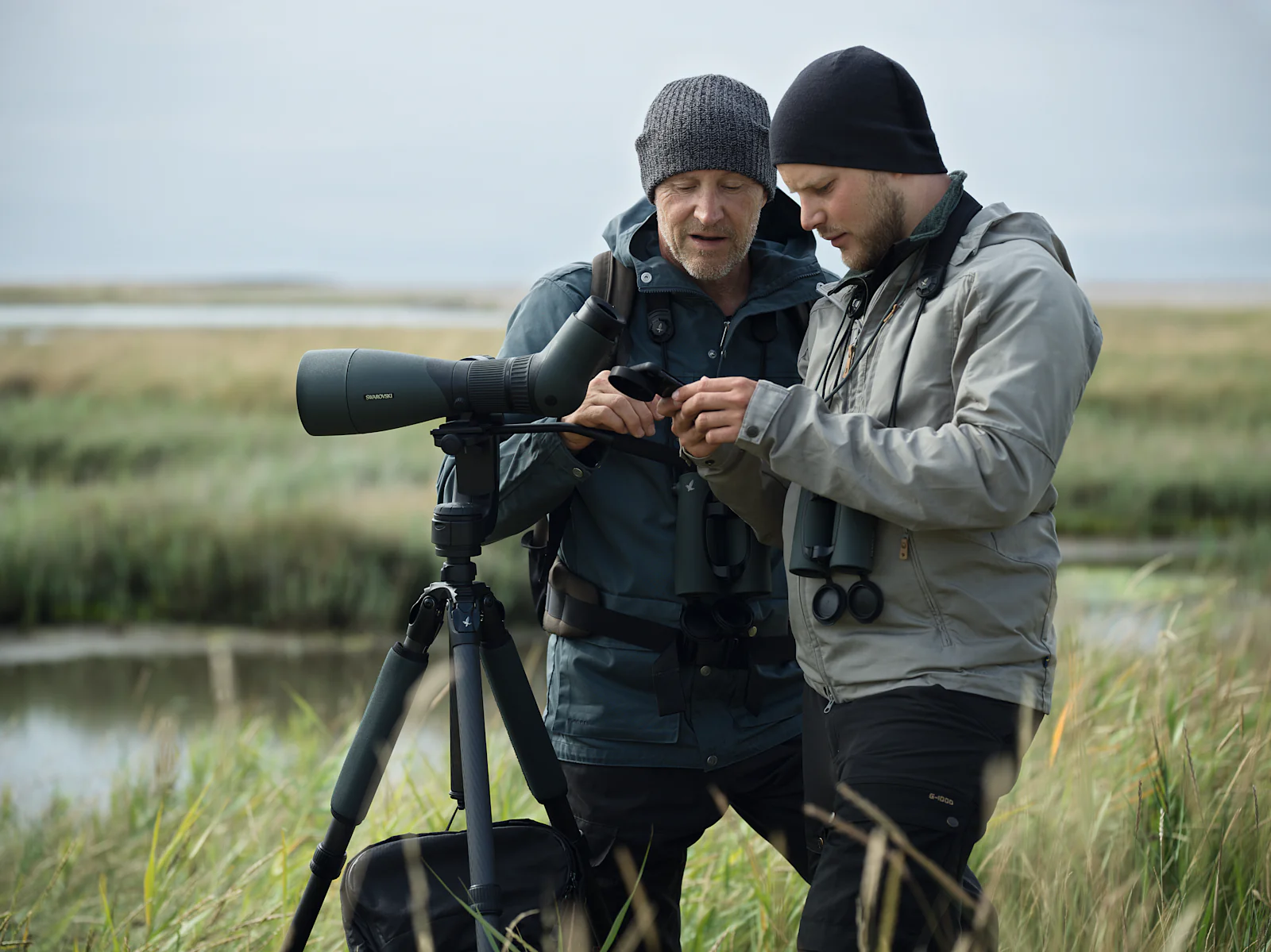
- Most hunters and birders use both: binoculars to find, the spotting scope to look closer.
The Real Difference
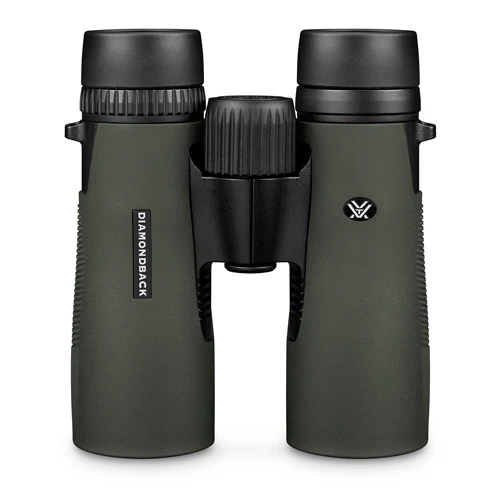
Binoculars usually magnify 8x to 15x. That's enough to see a lot, while the view stays wide and steady enough to hold by hand. You look with both eyes, which is more comfortable for long periods and makes it easier to judge depth.
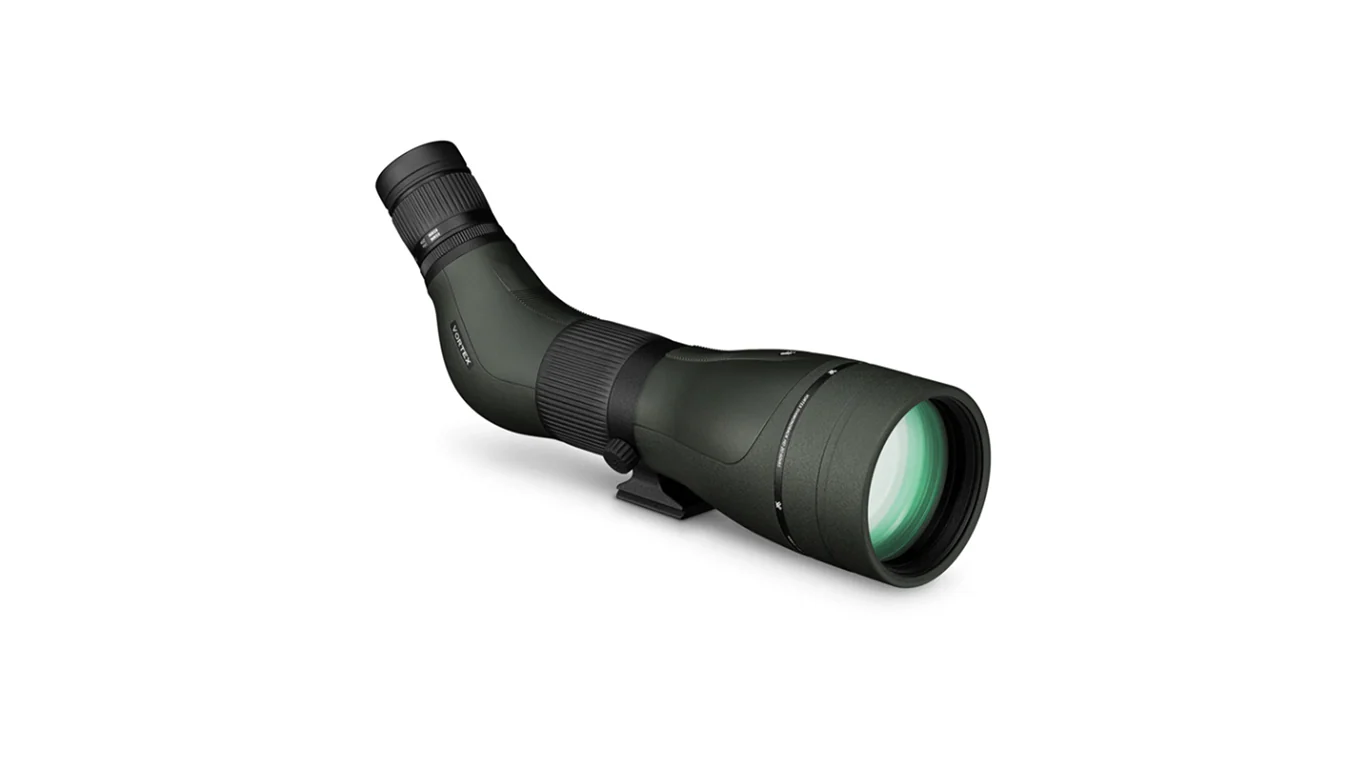
A spotting scope is a single telescope, usually with a zoom eyepiece — for example 20-60x on the Vortex Diamondback HD 20-60×85, or 25-60x on the Swarovski ATX 25-60×85 System. At those powers, even your heartbeat shakes the image, so a spotting scope is used on a tripod (or a window mount in a vehicle). You look with one eye.
| Binoculars | Spotting scope | |
|---|---|---|
| Magnification | Usually 8x–15x, fixed | Usually 15x–70x, often zoom |
| Eyes | Both eyes | One eye |
| Tripod | Not needed (useful at 12x+) | Needed |
| Field of view | Wide — easy to find things | Narrow — you aim it at something you've already found |
| Carry | Around your neck or in a chest harness | In a pack, with a tripod |
| Best at | Finding, following, general viewing | Judging detail at long distance |
When Binoculars Are Enough
- Hunting in timber or rolling country, where most animals are seen within a few hundred yards.
- Most bird watching — songbirds in trees and hedges move fast and are close; a wide view matters more than power.
- Hiking, travel, wildlife trips and sports, where you want something light and quick.
A good 8x42 or 10x42 covers all of this. If you're not sure which power, our Magnification vs Field of View guide explains the trade-off.
When You Need a Spotting Scope
- Western hunting in open country. You may spot an animal a mile away. Binoculars tell you it's an elk or a deer; a spotting scope tells you whether it's the animal you want — before you spend half a day getting closer.
- Shorebirds, waterfowl and raptors across water or open fields, where you can't get close.
- Target shooting — seeing your groups at 100 yards and beyond without walking downrange.
- Digiscoping — taking photos and video through the scope with your phone. See All About Digiscoping.
What About High-Power Binoculars?
Big binoculars like the Swarovski SLC 15×56 Binocular or the Vortex Diamondback HD 15×56 sit in the middle. On a tripod they're excellent for long glassing sessions, because looking with both eyes is far less tiring than squinting into a scope for an hour. But at 15x they can't show the detail a 60x spotting scope can at very long distances, and they're too shaky to use well by hand. Many western hunters use 15x binoculars for searching and a spotting scope only to check the best animals.
Rule of thumb: above about 12x, plan on a tripod — whether it's binoculars or a scope. Our tripod guide covers what to look for.
Choosing a Spotting Scope
Objective size: 50–65mm vs 85mm and up
The bigger the front lens, the brighter the image at high zoom and in poor light — but the heavier the scope. A compact scope like the Vortex Razor HD 13-39×56 Angled is easy to carry on long hikes. An 85mm scope gives a brighter view at 60x, which matters at dawn and dusk.
Angled or straight
An angled eyepiece lets you use a shorter tripod, share the scope with people of different heights, and look up at hillsides comfortably. A straight body is quicker to point at a target and easier to use from a vehicle window. Swarovski makes both versions of the same modular scope: ATX (angled) and STX (straight) — for example the Swarovski ATX 25-60×65 System and the Swarovski STX 25-60×65 System.
There's more detail in our Choosing a Spotting Scope guide.
Good Combinations at Every Budget
- Getting started: Vortex Diamondback HD 10×42 ($249.99) with the Vortex Diamondback HD 20-60×85 ($499.99).
- Serious, lighter kit: Vortex Razor UHD 10×42 ($1,799.99) with the compact Vortex Razor HD 13-39×56 Angled ($999.99).
- No compromises: Swarovski NL Pure 10×42 ($3,199) with the Swarovski ATX 25-60×85 System ($5,098).
Buying only one? Start with binoculars. You'll use them every trip; add a spotting scope when you find yourself wishing you could see more detail far away.